
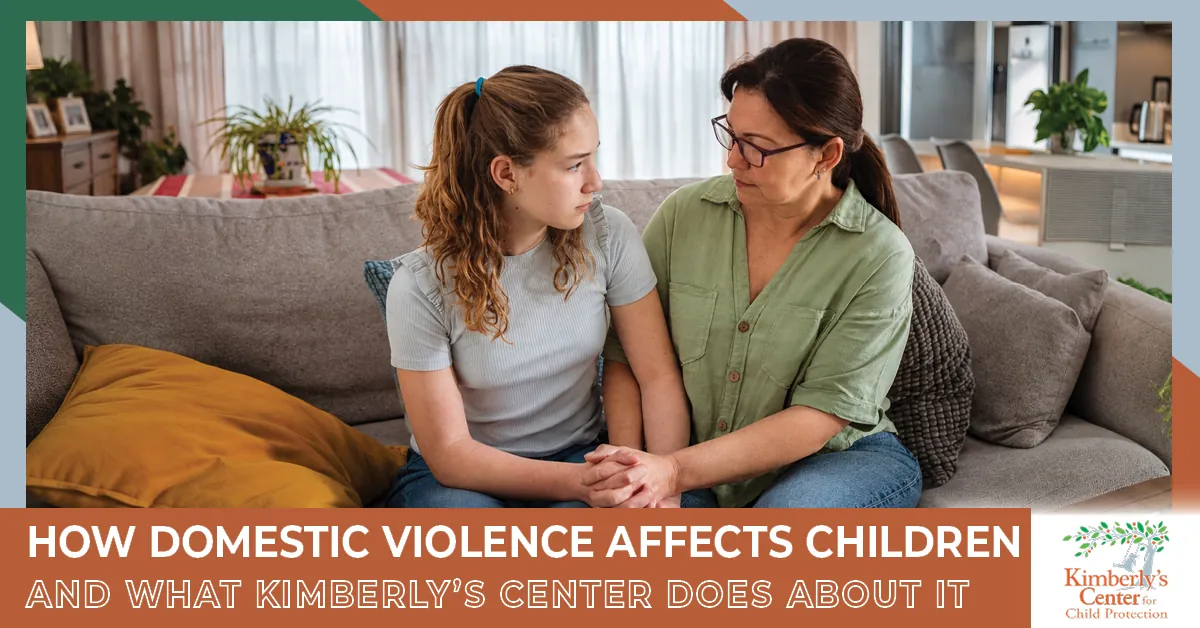
When most people think about child abuse, they think about direct physical or sexual harm to a child. But one of the most significant and often overlooked forms of childhood trauma happens when a child witnesses violence between the adults in their home.
October is Domestic Violence Awareness Month, and at Kimberly’s Center for Child Protection, it’s a reminder that protecting children means understanding the full picture of what trauma looks like in their lives.
The Connection Between Domestic Violence and Child Abuse
Domestic violence and child abuse are deeply interconnected. Research shows that in homes where intimate partner violence is occurring, children are significantly more likely to also experience direct abuse or neglect. According to the American Academy of Pediatrics, children who are exposed to domestic violence experience many of the same psychological effects as children who are directly abused.
In Florida, exposure to domestic violence is recognized as a form of child maltreatment. Children do not need to be physically harmed to be victims. Witnessing violence between caregivers — hearing it, seeing its aftermath, or living in the fear and instability it creates — causes real, lasting harm.
At Kimberly’s Center, domestic violence accounts for 10% of the maltreatment cases we see each year. Behind that number are real children carrying a weight no child should have to carry.
How Domestic Violence Affects Children
The impact of domestic violence on children varies by age, the severity and duration of the violence, and the protective factors present in the child’s life. But research consistently shows that exposure to intimate partner violence can affect children across every dimension of their development.
Emotional and behavioral impacts:
- Anxiety, depression, and post-traumatic stress
- Difficulty regulating emotions
- Aggression or withdrawal
- Sleep disturbances and nightmares
- Decreased self-esteem and sense of safety
Cognitive and academic impacts:
- Difficulty concentrating and learning
- Delayed language and cognitive development
- Decreased school attendance and performance
Physical health impacts:
- Increased risk of chronic health conditions
- Headaches, stomachaches, and other somatic complaints
- Disrupted sleep and appetite
The long-term impacts are equally significant. Exposure to domestic violence is one of the Adverse Childhood Experiences (ACEs) linked to increased risk of mental health challenges, substance abuse, and chronic physical health conditions in adulthood. The more ACEs a child accumulates, the greater the risk — making early intervention critical.
What Happens When a Child Is Referred to Kimberly’s Center
When domestic violence occurs in a home with children, the Department of Children and Families or law enforcement may refer the family to Kimberly’s Center. From the moment they arrive, children and their non-offending caregivers are met with a coordinated, compassionate response.
Forensic Interview
If a child has witnessed or experienced abuse in the context of domestic violence, a forensic interview gives them a safe, trauma-informed space to share their experience in their own words. The child only has to tell their story once. Law enforcement and child protective services observe without requiring the child to repeat their account to multiple agencies.
Medical Assessment
Children referred to Kimberly’s Center may receive a medical exam to assess for any physical signs of abuse or neglect and ensure they receive any necessary medical care.
Trauma Therapy
Children who have witnessed domestic violence often carry significant emotional trauma. Kimberly’s Center’s specialized therapists provide trauma-informed therapy to help children process their experiences, understand that what happened was not their fault, and build the coping skills they need to heal. Last year, Kimberly’s Center provided 2,198 therapy sessions to children in Marion County.
Advocacy for the Whole Family
Kimberly’s Center’s Child Advocates work with children and their non-offending caregivers, which often includes domestic violence survivors working to protect their children and rebuild their lives. Advocates provide crisis support, case management, and connections to essential community resources, ensuring that families are not left to navigate the aftermath of domestic violence alone.
Supporting Non-Offending Caregivers
One of the most important things Kimberly’s Center does is support the adults who are trying to protect their children. Domestic violence survivors often face enormous barriers — financial instability, fear, isolation, and trauma of their own — that make it difficult to access help.
Kimberly’s Center’s advocacy team works to connect non-offending caregivers to local resources, including housing assistance, legal support, counseling, and community services. Because when a caregiver is supported, children are safer.
How the Community Can Help
Domestic violence does not happen in isolation. It happens in our neighborhoods, in our schools, and in families we know. Every adult in Marion County has a role to play in protecting children from its effects.
If you suspect a child is being harmed or witnessing violence at home, you are required by Florida law to report it. Every adult in Florida is a mandated reporter.
Florida Abuse Hotline: Call 1-800-962-2873, available 24 hours a day, 7 days a week, or report abuse online through the Florida Department of Children and Families.
For immediate danger: Call 911.
Contact Kimberly’s Center: 352-873-4739 or visit KimberlysCenter.org.
Kimberly’s Center Is Here
Child abuse and domestic violence thrive in silence. Kimberly’s Center exists to break that silence — providing every child and family in Marion County with the care, support, and resources they need to heal and move forward.
This October, during Domestic Violence Awareness Month, we invite our community to learn, speak up, and take action on behalf of Marion County’s children.
To learn more about Kimberly’s Center for Child Protection and the services we provide, visit KimberlysCenter.org or call 352-873-4739.
Sources
- American Academy of Pediatrics, Intimate Partner Violence and Children — View resource
- The National Child Traumatic Stress Network, Domestic Violence and Children — View resource
- The National Child Traumatic Stress Network, Effects of Intimate Partner Violence — View resource