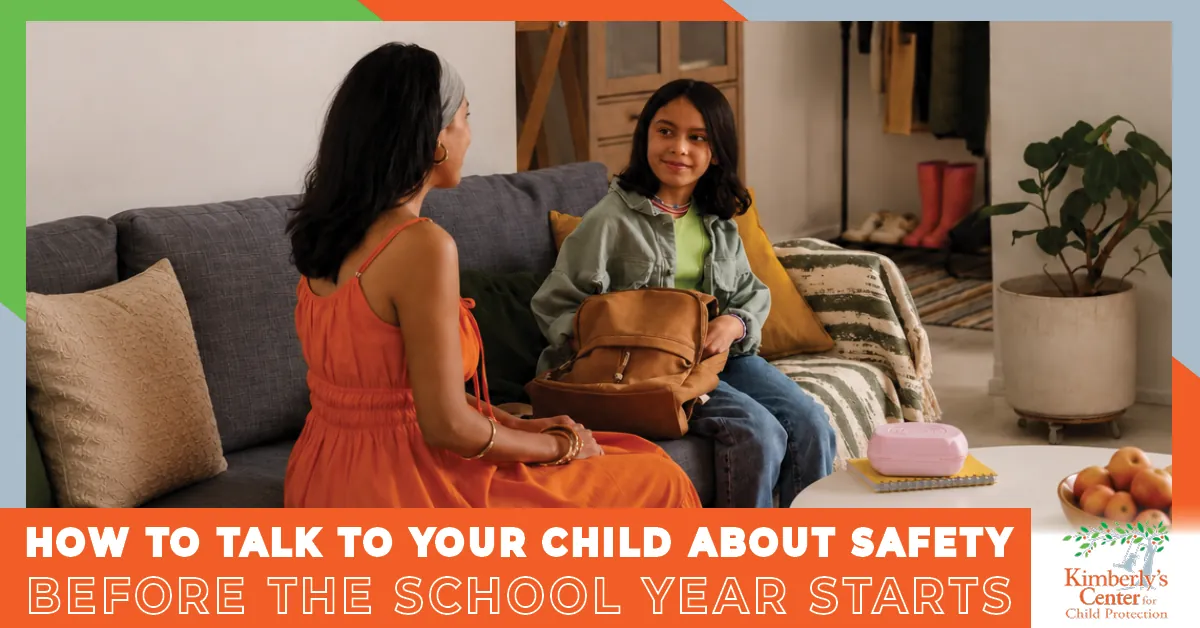
How to Talk to Your Child About Safety Before School Starts
The school year has a way of arriving before you feel ready for it. Before it does, there’s one conversation worth having at home. Talking to your child about safety doesn’t have to be a heavy, one-time sit-down. It just has to happen. Here’s how to start.
Talk About Body Safety Early and Often
Body safety is the foundation of child abuse prevention. Children who understand that their body belongs to them, and that no one has the right to touch them in ways that make them uncomfortable, have language for something that can otherwise be very hard to name.
For younger children, keep it simple and concrete. Use the correct names for body parts. Explain that the parts covered by a bathing suit are private. Let them know the difference between safe touch and unsafe touch, and that unsafe touch is never their fault.
For older children and teens, the conversation can go deeper. Talk about the difference between healthy and unhealthy relationships. Talk about pressure, boundaries, and what it means to feel uncomfortable. Make it clear that their body belongs to them at every age.
The goal is to have many small conversations woven into everyday life so children know that safety is something your family talks about openly.
Help Them Name Their Trusted Adults
A trusted adult is someone a child can turn to when something feels wrong. Before the school year starts, help your child identify at least three trusted adults in their life, including people outside your immediate family, such as a teacher, a counselor, a grandparent, or a family friend.
Practice what it sounds like to tell someone something difficult. Let your child know that no matter what they share, they will not be in trouble for telling the truth. Remind them that a trusted adult will listen, believe them, and help them find the right support.
For younger children, make this concrete. Who are three people you could tell if something made you feel scared or uncomfortable? Name them. Talk about them. Revisit the conversation throughout the year.
For older children, the trusted adult conversation looks different. Teens are more likely to turn to peers than adults when something goes wrong. Talk openly about why having an adult in their corner matters, and make sure they know you are always one of those people, regardless of what they share.
Have the Online Safety Conversation Before School Starts
The school year brings new social dynamics and new online activity. Before it begins is the right time to revisit the rules and expectations around technology.
Talk to your child about who they are communicating with online. Remind them that people online are not always who they say they are. Let them know that if anyone online makes them feel uncomfortable, asks them to keep secrets, or asks for photos, they should come to you immediately without fear of losing their device or getting in trouble.
For younger children, focus on the basics: Only communicate with people you know in real life, never share personal information, and always tell a trusted adult if something online feels strange.
For teens, the conversation needs to go further. Talk about sexting and the legal consequences. Talk about what healthy online relationships look like versus what grooming can look like. Make sure they know that predators do not look like strangers online. They often spend weeks or months building trust before asking for anything.
Last year, more than 1,150 CyberTips were reported in Marion County through the National Center for Missing & Exploited Children. The online threat to children is real, and it is growing. These conversations are not optional.
Make It a Conversation, Not a Lecture
Children are more likely to absorb safety information when it feels like a natural conversation rather than a one-time sit-down talk. Use everyday moments as entry points. A news story, a scene in a show, or a question your child asks on the way to school are all opportunities to reinforce the messages you want them to carry with them.
Ask questions. What would you do if a friend asked you to keep a secret from me? What would you do if someone online asked for a photo? Who would you tell if something happened at school that made you feel unsafe? Their answers will tell you a lot about what they already know and where the gaps are.
Kimberly’s Center Is Here to Help
At Kimberly’s Center for Child Protection, prevention education is central to our mission. Through our partnership with Marion County Public Schools, we bring the Child Safety Matters curriculum to every public school in the county, teaching children about body safety, trusted adults, and digital dangers in age-appropriate, evidence-based ways.
We also know that the most important safety lessons happen at home. Caregivers who talk openly with their children about safety create a foundation that protects children long after the school day ends.
The school year is a fresh start. Make safety one of the most important conversations your family has before the first day of school.
For more information about Kimberly’s Center and our prevention programs, visit KimberlysCenter.org.